
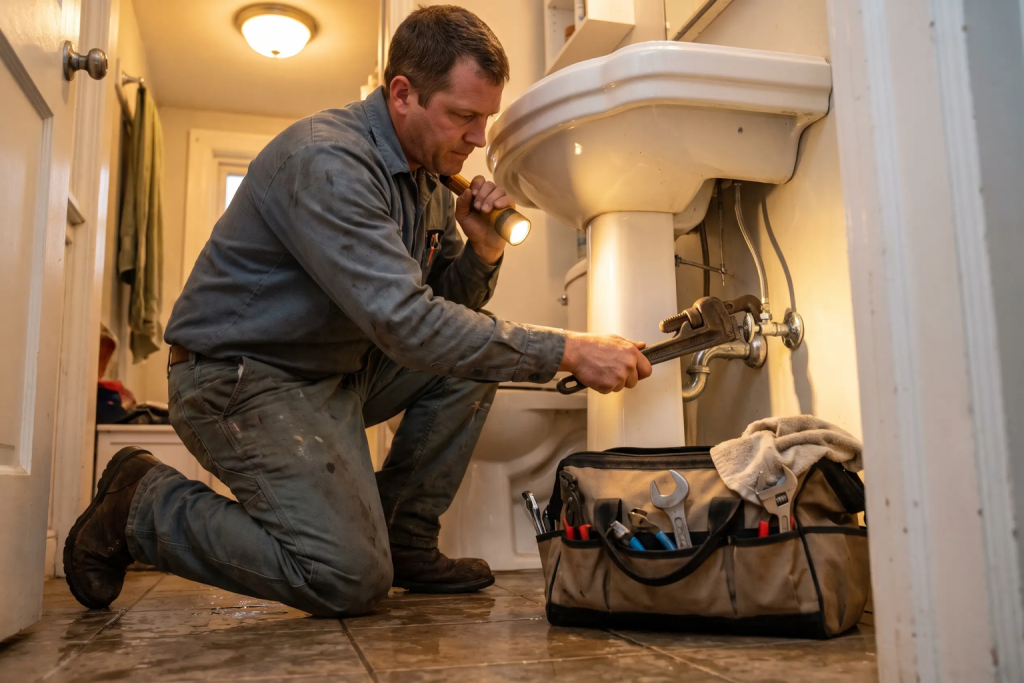
First, check if turning the local fixture valve stops the water flow right away. Soaked drywall and subfloors can start growing mold in 24 to 48 hours.
What Counts as a Plumbing Emergency
| Plumbing Failure | Shut-Off Valve Test | Dispatch Urgency |
|---|---|---|
| Burst pipe in wall or floor | Bypasses your local fixture valves | Call a 24-hour plumber tonight |
| Raw sewage in lower floor drains | Fixture valves cannot stop main backups | Call for night sewer dispatch |
| Ruptured water heater or rotten-egg gas | Needs tank valve or gas meter | Leave for gas and call now |
| Single dripping sink or clogged toilet | Local fixture valve stops the drip | Use second bathroom until morning |
- Find your indoor main shut-off valve in the basement, garage, utility closet, or near the meter. Turn a round wheel clockwise or a ball lever 90 degrees, and open the lowest spigot to drain pressure.
- Switch off the water heater electric breaker or turn the gas dial to Pilot. This simple step keeps a dry tank from burning out.
- Stop flushing toilets or running appliances if sewage backs up. Wait to use sinks or tubs until the main line is clear.
- Take timestamped photos of the pipe break and wet drywall to meet your homeowners insurance duty-to-mitigate rule.
Emergency Plumber Rates and Trip Charges
Daytime plumbing labor runs $90 to $150 per hour, within a broad $45 to $200 range. When pipes fail late at night, on weekends, or on holidays, hourly rates climb to $150 to $250. You can skip that fee when a local contractor advertises flat-rate no-overtime pricing.
Knowing full job totals helps you set a clear budget before calling a truck to your door. An average urgent repair costs $325 on most night calls. Clearing an overflowing toilet or clogged drain runs $150 to $400. Major breaks cost $1,000 to $4,000+ to excavate or repipe a burst main line.
Sending an on-call tech in a stocked truck after hours carries a flat diagnostic dispatch fee of $49 to $350. That trip charge depends on your metro area and the time of night you call. The fee covers the drive to your house and a full check of the leak.
Upfront flat-rate pricing protects you from open-ended hourly billing when a job runs long. The plumber checks the break on-site and hands you a written flat-rate repair price. You know the exact cost before the tech cuts any pipe. Once you approve the work, the shop waives or credits the initial trip fee toward the total invoice.
Hiring an Emergency Plumber Around the Clock
On-call plumbers prioritize active floor flooding or sewer backups for a 45 to 90 minute arrival window. Dispatch starts with live phone triage to check your shut-off status before the truck rolls out. You also get a courtesy call when the stocked truck is en route to your home.
Reaching a local plumber available around the clock matters most when an indoor gate valve is stuck shut. Forcing a corroded brass wheel can snap the stem and flood your floors. Your plumber brings a street curb-stop key to shut off water at the meter box.
Every homeowner, tenant, or remote landlord should confirm three key things before night repairs start. First, check for active state plumbing licensure and general liability insurance to prevent code violations. Next, get a written upfront quote before wall or slab access begins, plus complete claim documentation.
Homeowners insurance generally covers structural tear-out and drying, while you pay for the plumbing part itself. Ask the plumber to leave the failed fitting on-site so your adjuster can see it. Get an itemized invoice stating a sudden and accidental failure for your claim. Tenants can use a diagnostic receipt to seek tenant habitability reimbursement.
Core 24 Hour Emergency Plumbing Services
On-call techs stock the gear for urgent supply, drain, and water heater repairs across modern plumbing system infrastructure. Electronic leak detectors find hidden wall or slab leaks without cutting dry floors. Trucks also carry copper and PEX fittings, sump pumps, and replacement tank valves. Those stocked parts let the tech restore hot water on the first visit.
To resolve main sewer and gas emergencies, plumbers run fiber-optic sewer cameras down the line. The camera spots tree roots or grease in your private sewer lateral. Motorized cable augers and high-PSI hydro-jetting clear clogs to the city curb cleanout. On gas calls, techs pressure-test gas piping after the utility shuts off the meter.